

Maternal Nutrition Market Size to Surpass USD 70.36 Billion by 2035, Driven by Preventive Healthcare and AI-Led Innovation
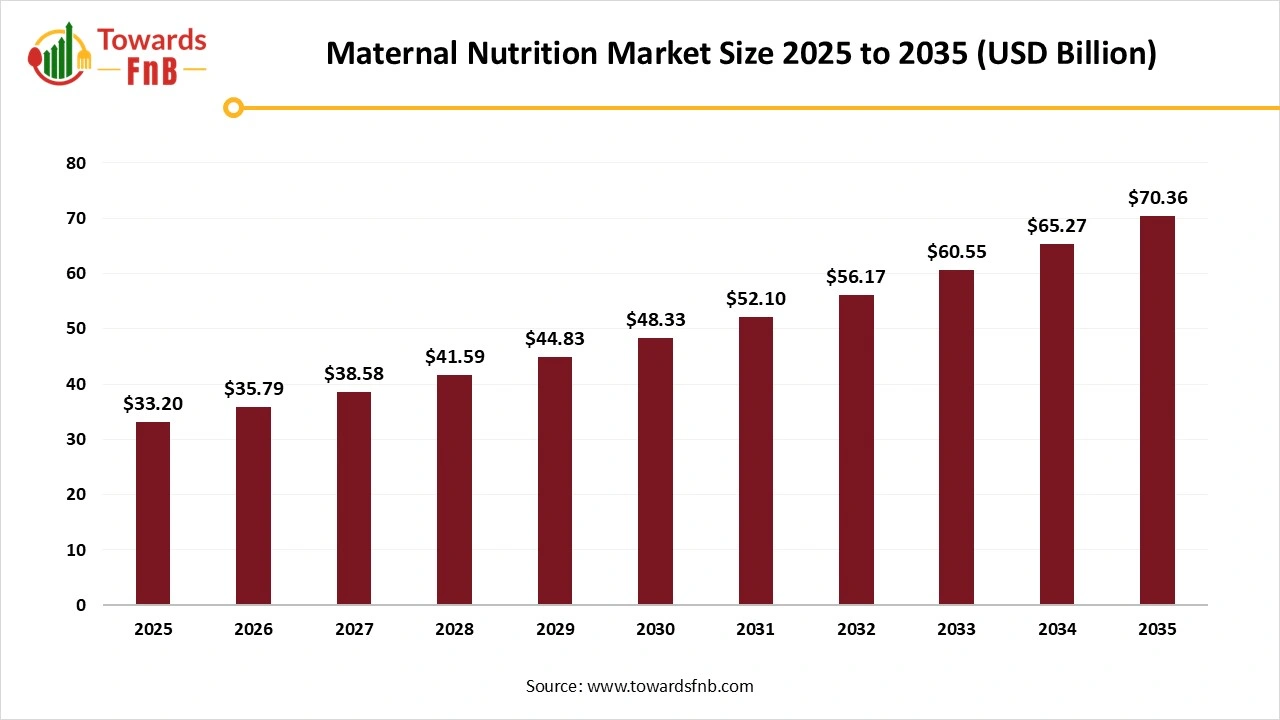
According to Towards FnB, the global maternal nutrition market size is calculated at USD 35.79 billion in 2026 and expand to approximately USD 70.36 billion by 2035, registering at a CAGR of 7.8% from 2026 to 2035. This steady growth reflects the rising strategic importance of maternal nutrition within preventive healthcare and functional nutrition ecosystems worldwide.
Ottawa, Jan. 05, 2026 (GLOBE NEWSWIRE) -- The global maternal nutrition market size stood at USD 33.20 billion in 2025 and is predicted to grow from USD 35.79 billion in 2026 to reach around USD 70.36 billion by 2035, according to a report published by Towards FnB, a sister firm of Precedence Research.
The market is expected to grow due to higher birth rates, leading to a shift in focus towards preventive healthcare, increased demand for maternal health services, and demand for products that support maternal health, among other similar activities.
Note: This report is readily available for immediate delivery. We can review it with you in a meeting to ensure data reliability and quality for decision-making.
Access the Full Study Instantly | Download Sample Pages of the Report Now@ https://www.towardsfnb.com/download-sample/5963
Key Highlights of the Maternal Nutrition Market
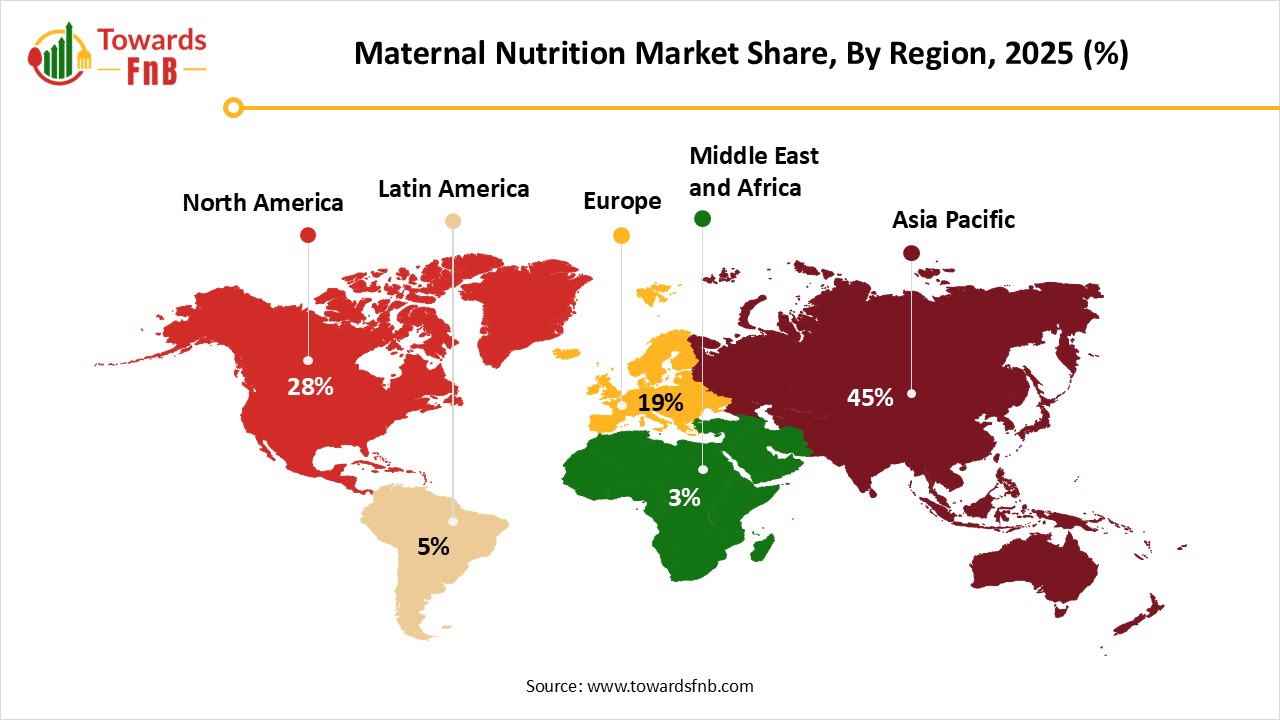
- By region, Asia Pacific held the largest share of the maternal nutrition market in 2025 with 45%, while North America is expected to experience the fastest growth during the forecast period.
- By product, prenatal supplements led the maternal nutrition market in 2025 with a significant share of 40.4%. However, the postnatal supplements segment is projected to grow at a notable CAGR from 2026 to 2035.
- By nutrients, vitamins and minerals dominated the maternal nutrition market in 2025 with a major revenue share of 46.5%. In contrast, the omega-3 fatty acids segment is expected to grow at a strong CAGR between 2026 and 2035.
- By form, the tablets and capsules segment led the market in 2025 with a substantial revenue share of 42.5%. Meanwhile, the gummies segment is projected to experience significant growth at a notable CAGR from 2026 to 2035.
-
By end use, the pregnancy segment was the leading contributor to the maternal nutrition market in 2025 with 42.6% of the revenue. The postpartum and lactation segment is expected to grow steadily at a strong CAGR through the forecast period from 2026 to 2035.
Maternal nutrition is transitioning from generic supplementation to precision-led, stage-specific nutritional support. Growth is increasingly driven by personalization, bioavailability science, and AI-assisted formulation rather than volume alone,” said Vidyesh Swar, Principal Consultant, at Towards FnB.
Impact of AI on the maternal nutrition market
Artificial intelligence (AI) is influencing the maternal nutrition market by improving formulation precision, strengthening safety controls, and enabling more stage specific nutritional solutions across preconception, pregnancy, and postpartum periods. In product development, AI systems analyze clinical nutrition guidelines, micronutrient requirements, and population level maternal health data to design formulations that meet trimester specific needs. These models evaluate optimal levels and interactions of nutrients such as folate, iron, iodine, calcium, DHA, choline, and vitamin D, helping manufacturers avoid both under dosing and excessive intake. AI also assesses ingredient bioavailability and gastrointestinal tolerance, which is critical for pregnant consumers who experience nausea or absorption challenges.
AI driven formulation tools simulate how nutrients behave in different delivery formats, including powders, gummies, ready to drink beverages, and fortified foods. This allows developers to select stabilizers, sweeteners, and carriers that preserve nutrient integrity while maintaining acceptable taste and shelf stability. For plant based or allergen sensitive maternal products, AI helps identify alternative nutrient sources that meet safety and labeling requirements.
Higher Awareness regarding Preventive Healthcare Fueling the Growth of the Maternal Nutrition Industry
The maternal nutrition market is observed to grow due to higher demand for rising awareness regarding preventive healthcare. Higher demand for products and supplements aiding the preconception, pregnancy, and postnatal period also helps to fuel the market’s growth. Such supplements are full of nutritional elements such as vitamins, minerals, iron, folic acid, and other nutrients helpful for the market’s growth. Growing disposable income, higher government support, and increasing birth rates are some of the major factors for the growth of the market.
Technological Advancements are Helpful for the Growth of the Maternal Nutrition Market
Technological advancements aiding personalization and customization are one of the major factors for the growth of the market. Technological advancements focus on personalization with the help of genetic testing, data analytics, and improved nutritional systems. Keeping a track of the current health data with the help of smart wearables is another major factor for the growth of the market, as it helps in easy management and balance of nutritional elements. AI also helps in easy health management by keeping a track of dietary patterns and suggesting the elements that are lacking or in excess as per the required nutrition at various stages.
View Full Market Intelligence@ https://www.towardsfnb.com/insights/maternal-nutrition-market
Recent Developments in the Maternal Nutrition Market
- In July 2025, the Ministry of Health, Nairobi, announced the launch of its Multiple Micronutrient Supplementation (MMS) Implementation Research Agenda. The main aim of the launch is to improve maternal nutrition in Kenya.
- In May 2025, the Department of Health (DOH), through the Philippine Multisectoral Nutrition Project, launched its Household Convergence Scorecard (HCSC) mobile application to keep a track of the health and nutrition for mothersand children within the first 1000 crucial days.
New Trends of the Maternal Nutrition Market
- Higher demand for tailored solutions for issues majorly observed, such as fatigue, pre-eclampsia, and mood swings, is one of the major factors for the growth of the market.
- Higher demand for functional, organic, and healthier supplement and food options for the baby and the mother is another major factor for the growth of the market.
- Higher demand for bioavailable formulations also helps to fuel the growth of the market.
Maternal Nutrition Market Dynamics
What are the Growth Drivers of the Maternal Nutrition Market?
Factors such as rising awareness regarding mother and baby health in the postpartum period, higher demand for convenient options like gummies, capsules, and tablets, and higher demand for nutritional supplements helpful to support lactation, immunity, and bone health of the mother and the child are some of the major factors for the growth of the market. Higher demand for supplements helpful to cure postpartum depression and fulfill the nutrition gaps, which cannot be fulfilled with a regular diet, also helps to fuel the growth of the market. Easy availability of such products on various platforms also helps to fuel the growth of the market.
What Factors Are Limiting the Growth of the Maternal Nutrition Market?
Higher costs of supplements, medicines, fortified foods, and nutritional products that help to nurture a mother and a baby in the postpartum period may restrict the growth of the market. Such options may not be affordable for all types of consumers. Hence, it may hamper the market’s growth due to non-suitability for price-conscious consumers. Hence, such issues altogether hamper the market’s growth.
How is Product Innovation Supporting Growth in the Maternal Nutrition Market?
Intake of essential nutrients such as vitamins, minerals, iron, calcium, phosphorus, and other nutrients available in different forms, such as tablets, capsules, and gummies, helps to fuel the market’s growth. Such forms are convenient, easy to carry, and easy to consume and are also easily absorbed by the body, further helpful for the growth of the market.
Product Survey of the Maternal Nutrition Market
| Product Category | Description or Function | Key Nutrients or Ingredients | Primary Use Stage | Representative Brands or Product Types |
| Prenatal Multivitamin Supplements | Core nutritional supplements designed to support maternal and fetal development. | Folic acid or methylfolate, iron, iodine, vitamin D, B vitamins | Preconception and pregnancy | Elevit, Nature Made Prenatal, Centrum Prenatal |
| Postnatal Multivitamin Supplements | Supplements formulated to replenish maternal nutrient stores after childbirth. | Iron, calcium, vitamin D, B12, biotin | Postpartum | Ritual Postnatal, New Chapter Perfect Postnatal |
| Maternal DHA and Omega-3 Supplements | Fatty acid supplements supporting fetal brain and eye development. | DHA, EPA, algae oil omega-3 | Pregnancy and lactation | Nordic Naturals Prenatal DHA, Minami MorEPA |
| Iron Supplements for Pregnancy | Targeted iron products addressing pregnancy-related anemia. | Ferrous fumarate, ferrous bisglycinate | Pregnancy | Maltofer, Slow-Fe Prenatal |
| Calcium and Vitamin D Supplements | Supplements supporting bone health for mother and fetus. | Calcium carbonate or citrate, vitamin D3 | Pregnancy and lactation | Caltrate Prenatal, Citracal |
| Folic Acid and Folate Supplements | Standalone folate products supporting neural tube development. | Folic acid, L-5-MTHF | Preconception and early pregnancy | Solgar Folate, Thorne Methylfolate |
| Maternal Protein Powders | High-protein nutritional powders formulated for pregnancy and lactation needs. | Whey protein, plant protein blends, added micronutrients | Pregnancy and lactation | Mama Protein, ProNatal Protein |
| Maternal Nutrition Shakes and RTD Drinks | Ready-to-drink beverages providing balanced calories and micronutrients. | Protein, DHA, calcium, iron, fiber | Pregnancy and postpartum | Enfamama, Similac Mom |
| Gestational Diabetes Nutrition Products | Specialized nutrition products for blood sugar control during pregnancy. | Low glycemic carbohydrates, fiber, chromium | Pregnancy | Clinical maternal nutrition formulas |
| Maternal Probiotic Supplements | Products supporting maternal gut health and immune balance. | Lactobacillus rhamnosus, Bifidobacterium strains | Pregnancy and postpartum | BioGaia Maternal Probiotic, Garden of Life |
| Maternal Fiber and Digestive Support Products | Products addressing constipation and digestive discomfort. | Inulin, psyllium husk, magnesium | Pregnancy | Fiber supplements, prenatal digestive blends |
| Herbal and Botanical Maternal Supplements | Traditional botanicals used cautiously under guidance. | Ginger extract, raspberry leaf, chamomile | Pregnancy and postpartum | Herbal supplement brands with prenatal lines |
| Lactation Support Supplements | Products supporting breast milk production and quality. | Fenugreek, moringa, DHA, iron | Lactation | Legendairy Milk, Motherlove |
| Maternal Nutrition Bars and Snacks | Convenient nutrient-dense snack formats for expectant mothers. | Protein, fiber, iron, DHA | Pregnancy and postpartum | KIND Healthy Snacks, prenatal snack bars |
| Maternal Nutrition Medical Foods | Clinically formulated nutrition for high-risk pregnancies. | Balanced macronutrients, micronutrient fortification | Pregnancy | Hospital and clinical nutrition products |
| Vegan and Plant-Based Maternal Nutrition Products | Products formulated without animal-derived ingredients. | Plant DHA, iron, B12, iodine | Pregnancy and lactation | Ritual Prenatal Vegan, Garden of Life Prenatal |
| Organic Maternal Nutrition Products | Products using certified organic ingredients. | Organic vitamins, minerals, plant extracts | Pregnancy | New Chapter Organic Prenatal |
| Personalized Maternal Nutrition Programs | Customized nutrition plans based on maternal needs and biomarkers. | Tailored micronutrient blends | Preconception to postpartum | D2C personalized nutrition platforms |
For Detailed Pricing and Tailored Market Report Options, Click Here: https://www.towardsfnb.com/checkout/5963
Maternal Nutrition Market Regional Analysis
Asia Pacific Dominated the Maternal Nutrition Market in 2025
Asia Pacific led the maternal nutrition market in 2025, due to factors such as rising disposable income, rising awareness regarding postpartum nutrition, availability of different types of nutritional supplements in different forms, and easy availability of such supplements on various platforms, which help to fuel the market’s growth. India has a major contribution in the growth of the market due to supportive government policies, higher demand for essential nutrients such as multivitamins, omega-3, minerals, vitamins, and other nutrients.
North America is expected to grow in the Foreseen Period
North America is expected to grow in the foreseen period due to higher demand for functional options, higher demand for nutritional supplements, and product innovation, allowing consumers to buy nutritional supplements in various forms, which also helps to fuel the market’s growth. Higher demand for multivitamins, minerals, iron, calcium, phosphorus, and other nutrients helps to fuel the market’s growth in the foreseeable period. The US has a major role in the growth of the market of the region due to higher demand for different types of nutritional supplements and consumer awareness regarding prenatal and postnatal care.
Europe is observed to have a Notable Growth in the Foreseen Period
Europe is observed to have notable growth in the foreseen period due to higher demand for functional, clean-label, organic, and healthier food and beverages options. Higher demand for supplements such as multivitamins, DHA, iron folate, and various minerals also helps to fuel the market’s growth. Germany has made a major contribution to the growth of the market of the region due to higher consumer focus on prenatal and postnatal care, supplements aiding these stages, and higher demand for nutritional supplements.
Trade Analysis for the Maternal Nutrition Market
What Is Actually Traded (Product Forms and HS Proxies)
- Prenatal vitamin and mineral supplements in tablet, capsule or sachet form, commonly declared under HS 2106 or national supplement headings depending on formulation and claims.
- Maternal milk powders and fortified nutrition drinks, typically classified under HS 1901 or HS 2106 based on composition.
- Ready-to-drink maternal nutrition beverages, often cleared under HS 2202 as non-alcoholic beverages.
- Bulk vitamin and mineral premixes supplied to manufacturers, usually declared under HS 2106 or chemical-preparation headings depending on concentration.
Top Exporters (Supply Hubs)
- United States: Exporter of prenatal supplements, maternal nutrition powders and contract-manufactured finished products supported by a large dietary supplement industry.
- European Union: Key exporter of prenatal vitamins, mineral premixes and fortified maternal products, with Germany, Ireland and the Netherlands playing major roles.
- New Zealand: Exporter of dairy-based maternal nutrition powders leveraging high-quality milk supply and established nutrition brands.
- Australia: Supplier of maternal milk powders and supplements targeted at Asian markets, supported by regulated dairy and supplement manufacturing.
Top Importers (Demand Centres)
- China: Large importer of maternal milk powders and fortified nutrition products, driven by hospital-channel trust, premium positioning and cross-border ecommerce.
- Southeast Asia: Countries such as Vietnam, Indonesia and the Philippines import maternal supplements and nutrition powders due to rising urban births and modern retail expansion.
- Middle East: Import demand for maternal supplements and fortified foods linked to high prenatal care utilisation and reliance on imported nutrition products.
- Sub-Saharan Africa: Institutional imports of micronutrient supplements and fortified foods supported by public-health and donor programmes.
Typical Trade Flows and Logistics Patterns
- Finished supplements and maternal powders are shipped from North America, Europe and Oceania to Asia, the Middle East and Africa via containerised sea freight.
- Bulk premixes move to regional contract manufacturers where final packaging and labelling are completed for local markets.
- Cross-border ecommerce plays a significant role in premium maternal products, particularly into China and parts of Southeast Asia.
- Cold-chain is generally not required, but moisture, light and temperature stability are critical for vitamins and DHA-containing formulations.
Trade Drivers and Structural Factors
- Public-health guidance: WHO and national recommendations on prenatal supplementation shape product demand and institutional procurement.
- Premiumisation: Willingness to pay for trusted brands and clinically positioned products is strongest in East Asia.
- Urbanisation and healthcare access: Increased antenatal care visits correlate with higher supplement uptake.
- Formulation complexity: Inclusion of DHA, probiotics or specialised minerals increases reliance on cross-border ingredient sourcing.
-
Trust and safety: Consumer sensitivity to contamination and mislabelling affects supplier selection and trade routes.
Regulatory, Quality and Market-Access Considerations
- Maternal nutrition products are subject to strict regulation on nutrient levels, safety and claims due to pregnancy-related vulnerability.
- Importing markets require accurate labelling, stability data and, in some cases, pre-market notification or registration.
- Upper limits for vitamins and minerals are tightly controlled, particularly for vitamin A, iron and iodine.
- Documentation typically includes certificates of analysis, stability studies, batch traceability and allergen declarations.
Government Initiatives and Public-Policy Influences
- National antenatal nutrition programmes and supplementation guidelines influence procurement volumes and product specifications.
- Donor-funded maternal nutrition initiatives support cross-border trade of supplements into low-income countries.
- Food-safety and supplement-regulation reforms in Asia affect registration timelines and compliance costs.
Maternal Nutrition Market Report Scope
| Report Attribute | Key Statistics |
| Base Year | 2025 |
| Forecast Period | 2026 to 2035 |
| Growth Rate from 2026 to 2035 | CAGR of 7.8% |
| Market Size in 2027 | USD 38.58 Billion |
| Market Size in 2028 | USD 41.59 Billion |
| Market Size by 2035 | USD 70.36 Billion |
| Dominated Region | Asia Pacific |
| Fastest Growing Region | North America |
| Regions Covered | North America, Europe, Asia-Pacific, Latin America and Middle East & Africa |
Have Questions? Let’s Talk—Schedule a Meeting with Our Insights Team: https://www.towardsfnb.com/schedule-meeting
Maternal Nutrition Market Segmental Analysis
Product Analysis
The prenatal supplements segment led the maternal nutrition market in 2025, as it has a vital role in the pregnancy journey of a mother, and it also plays an important role in the maternal nutrition industry. The segment involves supplements helpful to ensure healthy pregnancy outcomes, supporting fetal growth, reducing maternal anemia, preventing birth defects, and reducing nutrient gaps. Higher demand by mothers for essential nutrients such as calcium, iron, folate, vitamins, minerals, and many other nutrients also helps to fuel the growth of the market. The market is also propelled by the easy availability of such supplements on various platforms, ensuring mothers are not deprived of any essential supplement.
The postnatal supplements segment is expected to grow in the foreseen period, as such supplements are essential for the growth and development of the mother and the child in the postnatal period. The nutrients and nourishment lost during childbirth and pregnancy are retained with the help of postnatal supplements, which are helpful to fuel the growth of the market in the foreseeable period. Hence, the segment has a major contribution to the growth of the market in the forecast period.
Nutrients Analysis
The vitamins and minerals segment led the maternal nutrition market in 2025, as vitamins and minerals are essential for the mother as well as the baby in the maternal nutrition industry. Such essential nutrients help to aid a mother’s and baby’s growth, support lactation, lower risks such as preterm birth, ensure a healthy fetal development, and prevent neural tube defects and anemia. Higher demand for micronutrient supplements such as iron folic acid and multivitamins is another major demand for the growth of the market.
The omega-3 fatty acids segment is expected to grow in the foreseen period due to its multiple benefits for a mother’s and baby’s growth and development. Omega-3 fatty acids help to elevate the mood of a mother in the postpartum period, which is further helpful for a mother to manage postpartum depression. Hence, such factors help to fuel the growth of the market. Increasing awareness of omega-3 regarding its benefits for the mother and baby's health in the form of fortified foods, algae oil, and fish oil, also helps to fuel the market’s growth in the foreseeable period.
Form Analysis
The tablets and capsules segment led the maternal nutrition market in 2025, due to its easy availability and convenience provided by the segment. Tablets and capsules are easy to consume and are also easily absorbed by the body to fill in the nutrition gap observed in the consumption of normal food. Tablets and capsules can be consumed easily and in an accurate quantity, aiding the routine of a busy mother in the postpartum period, which is helpful for the growth of the market.
The gummies segment is expected to grow in the foreseen period due to the high convenience provided by the platform, easy consumption, and its higher palatability. Gummies are easy to carry and consume, further fueling the market’s growth. They are high in nutrition and essential minerals such as iron, vitamins, calcium, and other required essentials. Hence, the segment has a major contribution to the growth of the maternal nutrition market.
End Use Analysis
The pregnancy segment led the maternal nutrition market in 2025, due to major concerns such as increasing weight in the postpartum period, higher demand for fortified foods and supplements to balance the nutritional levels, growing birth rates, and increasing government support initiatives, further fueling the growth of the market. The growing concern for obesity and malnutrition for the mother and the child is another major factor for the growth of the market.
The postpartum and lactation segment is expected to grow in the foreseen period due to higher demand for supplements and tablets helpful to aid mothers’ and children’s health in the postpartum period, aid healthy lactation, and manage weight in the postnatal period, and higher demand for essential nutrients for the child to keep them protected from any immediate infections and harmful diseases. Such products also help to manage postpartum depression, improve bone health, improve immunity, and aid maternal growth.
Feel Free to Get in Touch with Us for Orders or Any Questions at: sales@towardsfnb.com
Additional Topics Worth Exploring:
- Dietary Supplements Market: The dietary supplements market size is projected to reach USD 464.58 billion by 2034, growing from USD 192.68 billion in 2025, at a CAGR of 9.2% from 2025 to 2034.
- Frozen Food Market: The global frozen food market size is expected to grow from USD 214.32 billion in 2025 to reach around USD 347.01 billion by 2034, at a CAGR of 5.5% over the forecast period from 2025 to 2034.
- Vegan Food Market: The global vegan food market size is evaluated at USD 22.38 billion in 2025 and is expected to reach USD 55.88 billion by 2034, with a CAGR of 10.7% during the forecast period from 2025 to 2034.
- Sugar-Free Food Market: The global sugar-free food market size is expected to grow from USD 48.14 billion in 2025 to USD 83.2 billion by 2034, growing at a CAGR of 6.27% during the forecast period from 2025 to 2034.
- Food Additives Market: The global food additives market size is rising from USD 128.14 billion in 2025 to USD 214.66 billion by 2034. This projected expansion reflects a CAGR of 5.9% throughout the forecast period from 2025 to 2034.
- Ethnic Food Market: The global ethnic food market size is forecasted to expand from USD 93.47 billion in 2025 to reach around USD 179.21 billion by 2034, growing at a CAGR of 7.5% during the forecast period from 2025 to 2034.
- Meal Kits Market: The global meal kits market size is projected to rise from USD 17.11 billion in 2025 to approximately USD 58.8 billion by 2034, registering a CAGR of 14.7% during the forecast period from 2025 to 2034.
- Baking Ingredients Market: The global baking ingredients market size is projected to grow from USD 18 billion in 2025 to around USD 31.72 billion by 2034, at a CAGR of 6.5% during the forecast period from 2025 to 2034.
- Fresh Produce Market: The global fresh produce market size is projected to grow from USD 3,707 billion in 2025 to approximately USD 5,653 billion by 2034. This anticipated growth represents a CAGR of 4.80% during the forecast period from 2025 to 2034.
- Beverage Packaging Market: The global beverage packaging market size is projected to reach USD 271.80 billion by 2034, growing from USD 173.71 billion in 2025, at a CAGR of 5.1% during the forecast period from 2025 to 2034.
- Coconut Products Market: The global coconut products market size is expected to climb from USD 14.18 billion in 2025 to approximately USD 33.71 billion by 2034, growing at a CAGR of 10.1% during the forecast from 2025 to 2034.
- Pet Food Market: The global pet food market size is expected to increase from USD 113.02 billion in 2025 to USD 167.97 billion by 2034, growing at a CAGR of 4.5% throughout the estimated timeframe from 2025 to 2034.
-
Organic Food Market: The global organic food market size is expected to grow from USD 253.96 billion in 2025 to USD 660.25 billion by 2034, with a compound annual growth rate (CAGR) of 11.20% during the forecast period from 2025 to 2034.
Top Companies of the Maternal Nutrition Market
- Danone S.A.: Danone is a global leader in maternal and early-life nutrition, offering science-backed prenatal and postnatal products through well-established brands. Its strong clinical research capabilities, hospital partnerships, and focus on preventive nutrition reinforce demand across premium and healthcare-led channels.
- Pfizer Inc.: Pfizer participates in the maternal nutrition space through pharmaceutical-grade vitamins and supplements supporting pregnancy and postpartum health. The company’s regulatory expertise and medical credibility strengthen physician confidence and adoption in clinically supervised nutrition segments.
- DSM-Firmenich: DSM-Firmenich supplies essential micronutrients, vitamins, omega-3 fatty acids, and functional ingredients used in maternal nutrition formulations worldwide. Its innovation in bioavailability and ingredient quality plays a central role in improving product performance across the value chain.
- Mead Johnson Nutrition (Reckitt): Mead Johnson Nutrition focuses on maternal and early-life dietary solutions supported by extensive scientific research. Its strong presence in hospital and pediatric care settings supports sustained growth in clinical and premium maternal nutrition categories.
- Himalaya Wellness: Himalaya Wellness offers plant-based and herbal maternal nutrition products derived from traditional medicine systems. Its clean-label positioning and natural formulations appeal to consumers seeking holistic and alternative maternal health solutions, particularly in emerging markets.
- Blackmores Limited: Blackmores provides evidence-based prenatal and postnatal supplements with a strong footprint in the Asia-Pacific region. The company’s premium positioning and focus on preventive healthcare support higher adoption among health-conscious consumers.
- Nature’s Bounty (Nestlé Health Science): Nature’s Bounty delivers a broad portfolio of prenatal vitamins and maternal supplements backed by Nestlé Health Science. Its global distribution network and strong scientific foundation enable wide-scale penetration across pharmacy, retail, and digital channels.
- Perrigo Company plc: Perrigo manufactures private-label and OTC maternal nutrition supplements for global retailers. Its cost-efficient production and private-label expertise improve product accessibility and affordability across price-sensitive consumer segments.
- Herbalife Nutrition Ltd.: Herbalife Nutrition offers maternal wellness and nutrition products through a global direct-selling model. Personalized nutrition guidance and distributor-led engagement support repeat consumption and long-term customer relationships.
- Church & Dwight Co., Inc.: Church & Dwight markets maternal nutrition supplements under recognized consumer health brands. Its strong mass-market presence and retail reach support widespread adoption among mainstream consumers.
- Arla Foods amba: Arla Foods is a global dairy cooperative supplying maternal milk-based nutrition products and fortified dairy solutions. High-quality dairy sourcing and continuous innovation in fortified formulations strengthen demand in premium and hospital nutrition channels.
- Amway Corporation: Amway provides maternal nutrition and wellness supplements through its extensive direct-selling network. Its emphasis on personalized nutrition education and relationship-driven sales enhances consumer trust and brand loyalty.
Segments Covered in the Report
By Product Type
- Prenatal Supplements
- Postnatal Supplements
- Maternal Milk & Milk-Based Formulas
- Fortified Foods & Beverages
By Nutrient Type
- Vitamins & Minerals
- Proteins & Amino Acids
- Omega-3 Fatty Acids
- Probiotics & Prebiotics
- Herbal & Botanical Nutrients
By Form
- Tablets & Capsules
- Powders
- Liquids
- Gummies
By End User
- Preconception
- Pregnancy
- Postpartum & Lactation
By Region
North America
- U.S.
- Canada
Asia Pacific
- China
- Japan
- India
- South Korea
- Thailand
Europe
- Germany
- UK
- France
- Italy
- Spain
- Sweden
- Denmark
- Norway
Latin America
- Brazil
- Mexico
- Argentina
Middle East and Africa (MEA)
- South Africa
- UAE
- Saudi Arabia
- Kuwait
Thank you for exploring our insights. For more targeted information, customized chapter-wise sections and region-specific editions such as North America, Europe, or Asia Pacific—are also available upon request.
For Detailed Pricing and Tailored Market Report Options, Click Here: https://www.towardsfnb.com/checkout/5963
Feel Free to Get in Touch with Us for Orders or Any Questions at: sales@towardsfnb.com
Unlock expert insights, custom research, and premium support with the Towards FnB Annual Membership. For USD 495/month (billed annually), get full access to exclusive F&B market data and personalized guidance. It’s your strategic edge in the food and beverage industry: https://www.towardsfnb.com/get-an-annual-membership
About Us
Towards FnB is a global consulting firm specializing in the food and beverage industry, providing innovative solutions and expert guidance to elevate businesses. With an in-depth understanding of the dynamic F&B sector, we deliver customized market analysis and strategic insights. Our team of seasoned professionals is committed to empowering clients with the knowledge needed to make informed decisions, ensuring they stay ahead of market trends. Partner with us as we redefine success in the rapidly evolving food and beverage landscape, and together, we’ll navigate this transformative journey.
Web: https://www.towardsfnb.com/
Our Trusted Data Partners
Precedence Research | Statifacts | Towards Packaging | Towards Chemical and Materials| Nova One Advisor | Food Beverage Strategies | FnB Market Pulse | Nutraceuticals Func Foods | Onco Quant | Sustainability Quant | Specialty Chemicals Analytics
For Latest Update Follow Us:
Discover More Market Trends and Insights from Towards FnB:
➡️Salt Market: https://www.towardsfnb.com/insights/salt-market
➡️Gluten-Free Bakery Market: https://www.towardsfnb.com/insights/gluten-free-bakery-market
➡️Canned Food Market: https://www.towardsfnb.com/insights/canned-food-market
➡️Dry Fruit Market: https://www.towardsfnb.com/insights/dry-fruit-market
➡️Frozen Meat Market: https://www.towardsfnb.com/insights/frozen-meat-market
➡️Fish Oil Market: https://www.towardsfnb.com/insights/fish-oil-market
➡️Soft Drink Concentrates Market: https://www.towardsfnb.com/insights/soft-drink-concentrates-market
➡️Coffee Beans Market: https://www.towardsfnb.com/insights/coffee-beans-market
➡️Soybean Market: https://www.towardsfnb.com/insights/soybean-market
➡️Beef Market: https://www.towardsfnb.com/insights/beef-market
➡️Cheese Market: https://www.towardsfnb.com/insights/cheese-market


Legal Disclaimer:
EIN Presswire provides this news content "as is" without warranty of any kind. We do not accept any responsibility or liability for the accuracy, content, images, videos, licenses, completeness, legality, or reliability of the information contained in this article. If you have any complaints or copyright issues related to this article, kindly contact the author above.
